

As an editorial wedding photographer, I watch and predict trends not to chase them, but to understand how they’ll translate visually and emotionally.
This round-up covers nine wedding trends spanning bridal and groom attire, guest fashion, and overall styling, all through a photographer’s lens. How will these trends impact your images? Are they likely to age well or feel dated in a few seasons?
Some trends elevate. Others distract. Here’s what’s worth your attention.
9 Upcoming Wedding Fashion & Styling Trends
Trend 1: Basque Waist Gowns & Sculptural Silhouettes
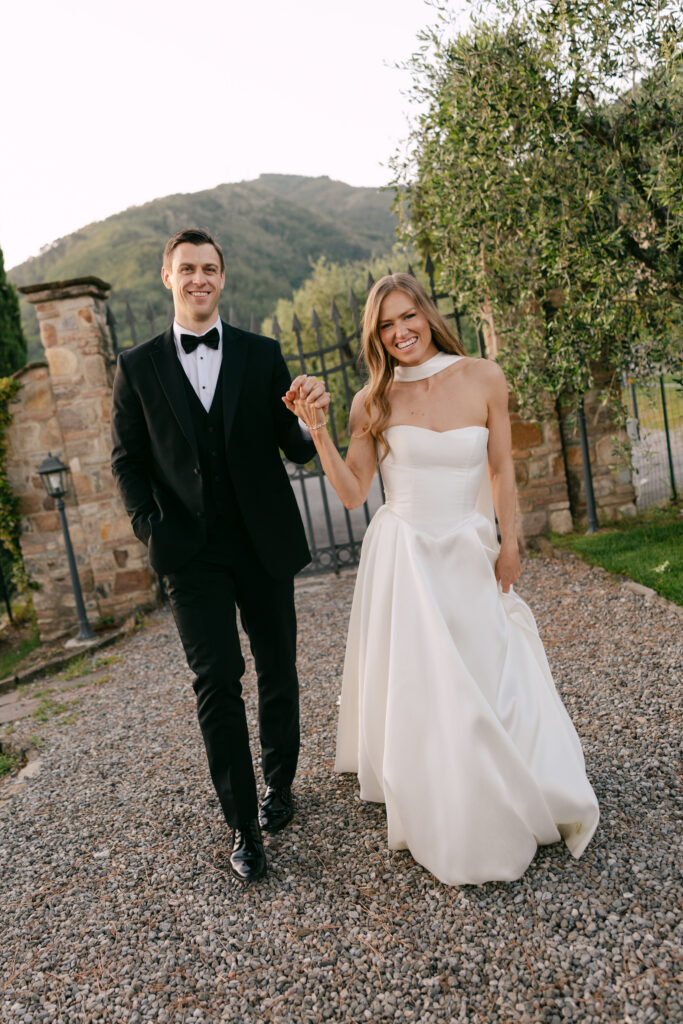
Featuring a corseted bodice with a dropped waist that gently emphasises the hip, the basque waist gown is having a serious moment. Spotted in Vogue editorials and on runways at Berta, Galia Lahav, and other bridal couture houses, it’s a distinct departure from the figure-hugging mermaid silhouettes and classic A-lines that have dominated bridal fashion for years.

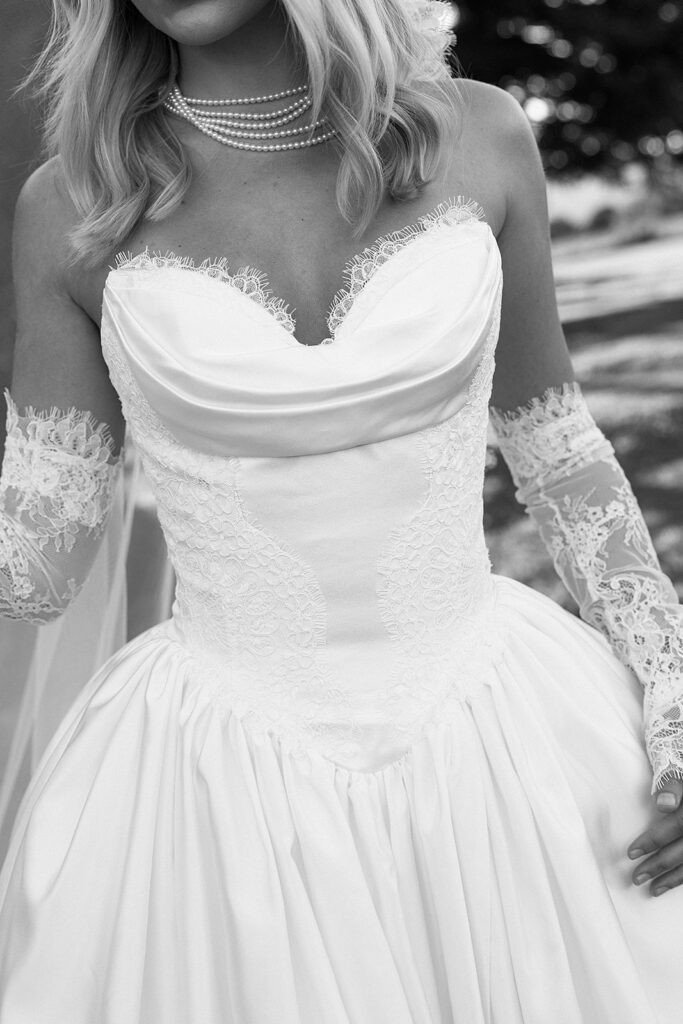
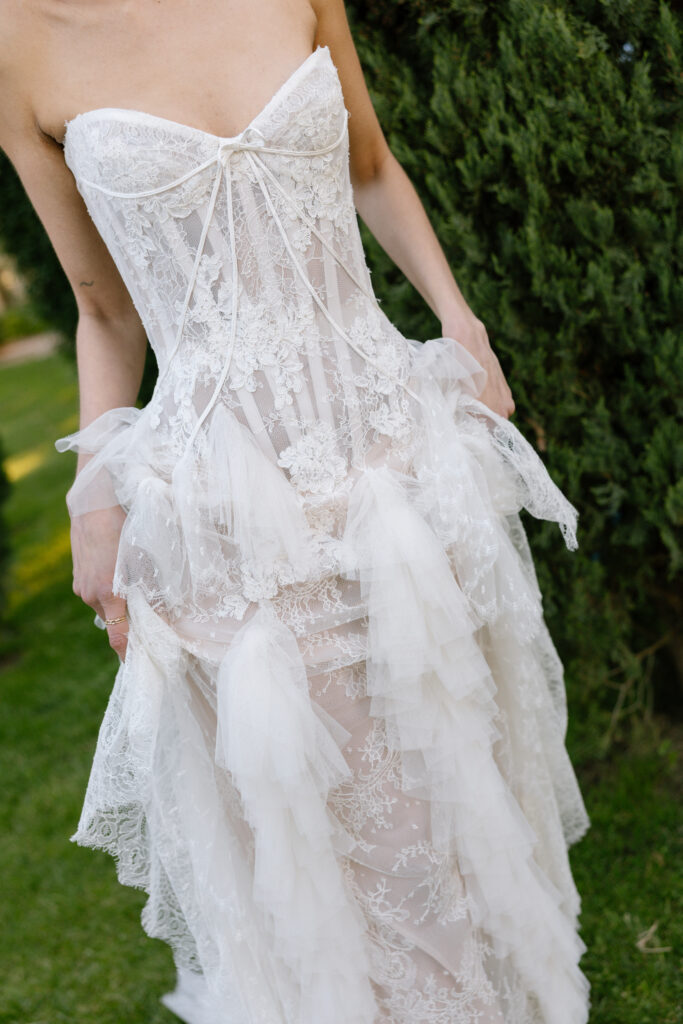
From a photographer’s perspective, I’ve been loving this trend. The basque waist creates a torso-lengthening, hourglass effect that flatters nearly every body shape. There’s an inherent formality and visual impact that translates beautifully in both candid and portrait frames, without relying on sparkle or embellishment.
What sets these gowns apart is their architectural tailoring. They’re structured to move with the wearer, fitting and flowing effortlessly rather than overwhelming the bride. The defined waist and voluminous skirt create natural movement and shape without complex posing.
Will it age well? Sculptural bridal silhouettes have staying power. They photograph with drama and elegance, and because the impact comes from shape rather than trend-driven details, they’re likely to feel timeless rather than dated.
Trend 2: Two Looks for Double Takes
Brides are increasingly embracing multiple looks throughout their wedding day: a statement gown for the ceremony and portraits, followed by something chic and party-ready for the reception. Some even pull out a surprise third look for the dance floor.
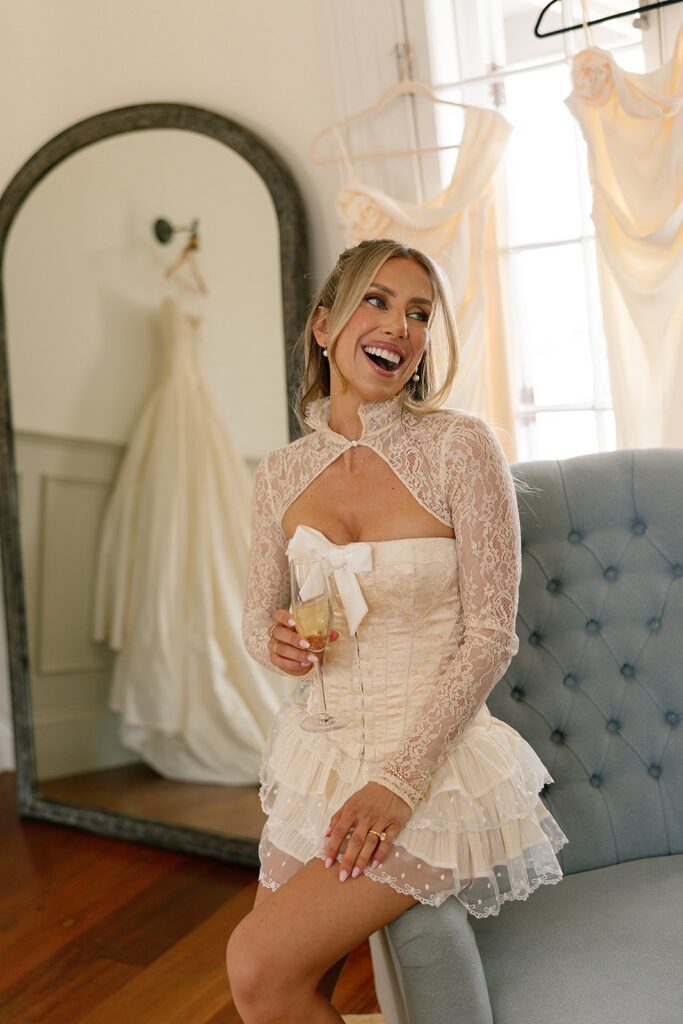
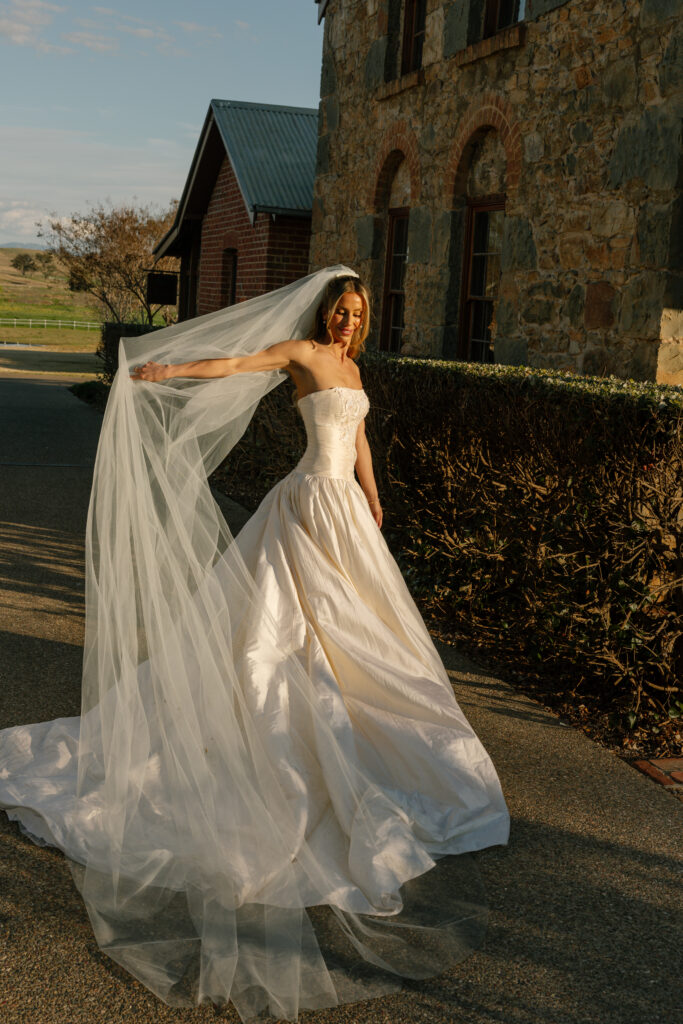
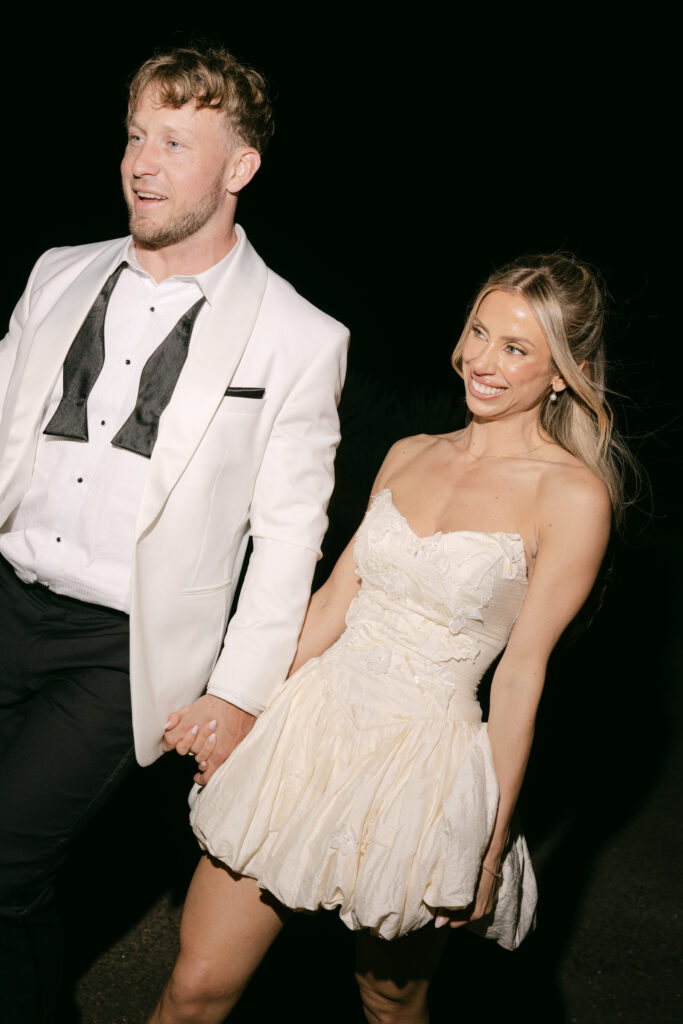
The flash makeover isn’t just about the dress; some brides change their hair, shoes, and accessories entirely. Grooms are joining in too, opting for formal tailoring during the day and paring back for evening festivities.
As a Melbourne editorial wedding photographer, the change-up adds more than just visual interest. It creates a natural chapter break in your gallery. The ceremony feels distinctly different from the reception, establishing a clear beginning, middle, and end to the visual narrative. It also opens up additional editorial portrait opportunities that feel justified rather than forced — there’s a reason to pause and capture the new look.
Will this trend stay? Multiple looks have been part of high-fashion weddings and celebrity celebrations for years. This trend isn’t going anywhere, especially for couples who see their celebration as a creative expression rather than just a formality. If you love fashion and want to experiment, your wedding day is the perfect excuse.
Trend 3: Editorial Groomswear
There’s been a distinct shift in men’s wedding wear. Fashion-forward grooms are moving beyond standard off-the-rack suits toward options completely tailored to the overall vibe of the day, not just their measurements. Traditionally, most grooms visit a suit shop for basic tailoring, with creativity limited to the cut, colour, and fabric available in stock.
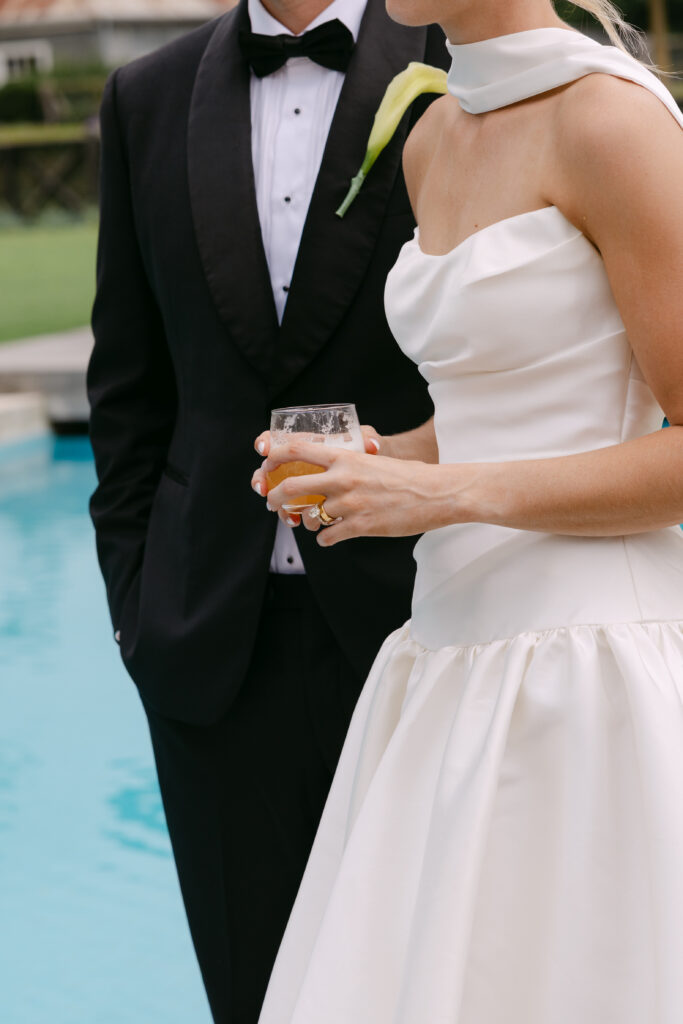


The Fall/Winter 2026 runway is showcasing sharper tailoring, richer textures, heritage details, and striking accessories. I’ve been loving double-breasted blazers, higher waistlines, non-traditional necklines, and sharp suspenders. These looks balance structured sophistication with relaxed tailoring, feeling modern rather than stiff.
From a photographer’s perspective, when the groom’s look is as considered as the bride’s, the couple photographs as a cohesive pair. You’re not capturing one person who’s impeccably styled next to someone who was just told to show up in a suit. Both parties look and feel confident, which translates directly into more genuine, relaxed portraits. The difference is noticeable.
The verdict? Absolutely worth embracing. As weddings evolve into modern celebrations rather than traditional formalities, couples are encouraged to show up authentically. The groom deserves as much creative expression and compliments as the bride.
Trend 4: Coloured Guest Dress Codes
Beyond standard black-tie requests, couples are getting specific about guest attire by setting a colour palette or an overall vibe. All black. All white. A single colour family with varying tones or overarching themes like “garden party pastels” or “chocolate and champagne”. I’ve even photographed a wedding where the entire guest list wore shades of pink, and the visual cohesion was stunning.
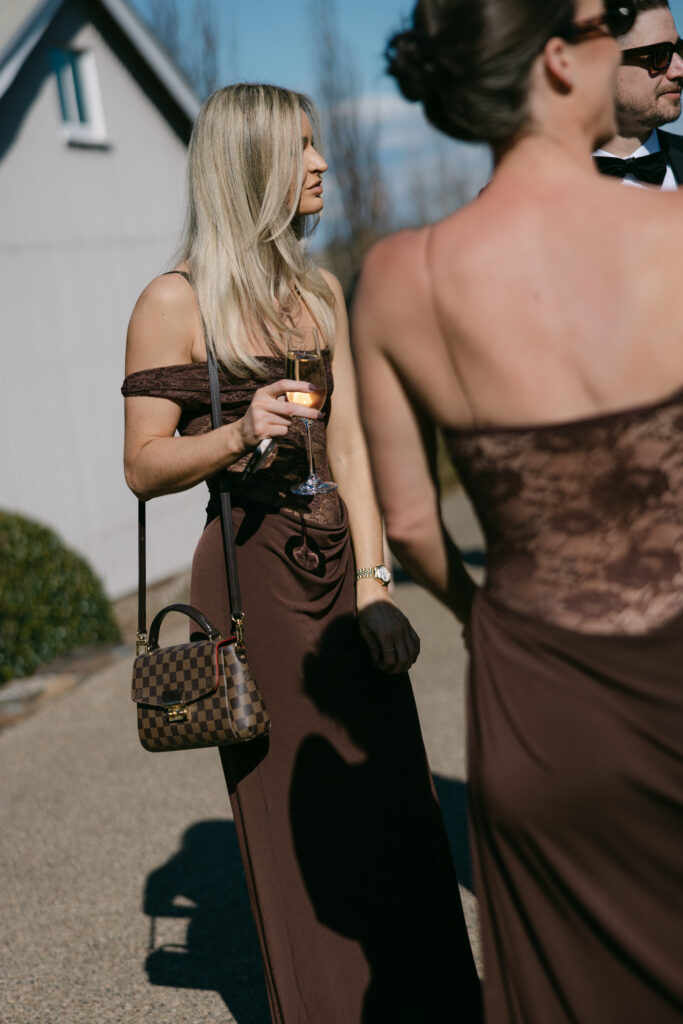
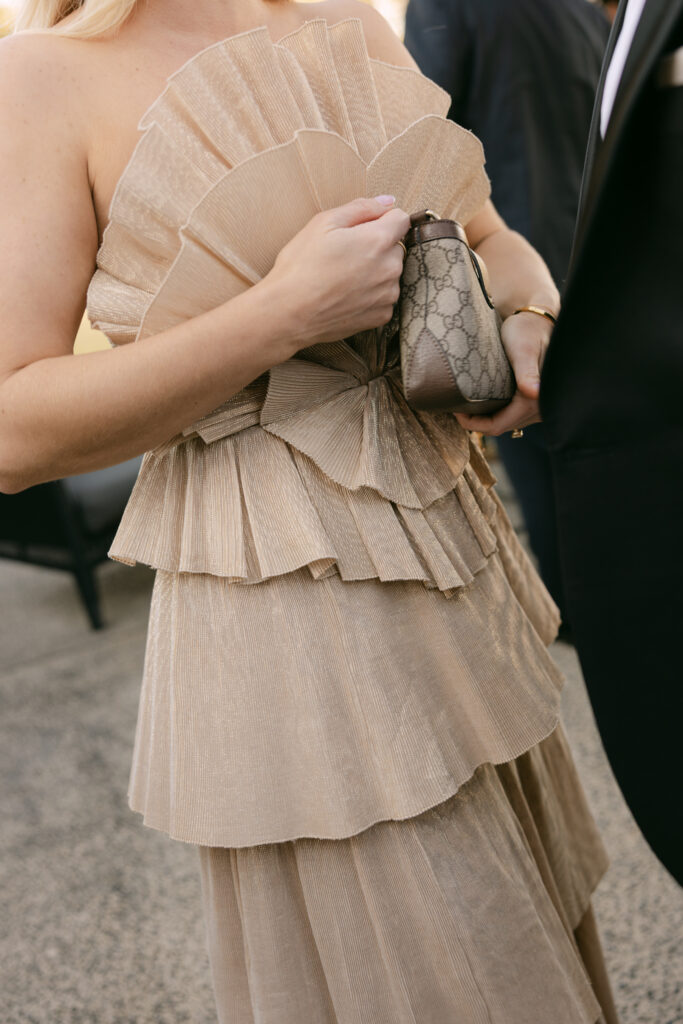
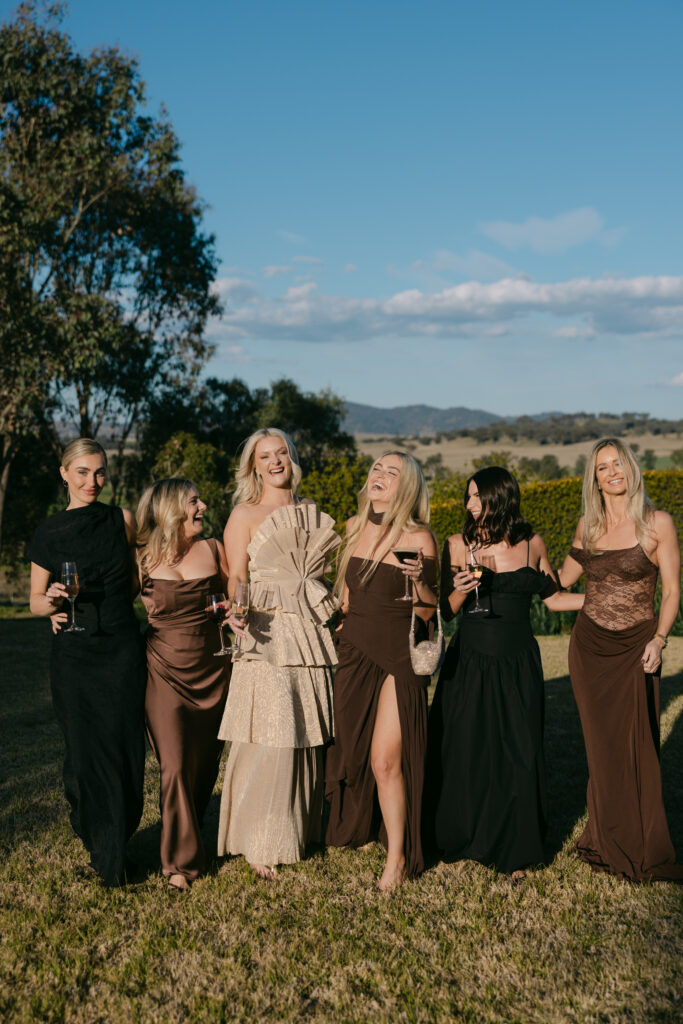
Pastel monochromes are also resurging in 2026, specifically because they photograph so well in natural light. In a sea of varying shades, it looks soft, modern, and cohesive without appearing uniform.
Behind the lens, I’m a huge fan of a considered guest dress code. When 120 guests are dressed with intention, the room photographs differently. The energy and atmosphere feel curated. It reinforces that this is their day, and you’re being invited to experience their world.
Should you consider it? If you have a clear vision for your wedding, don’t be afraid to extend it to your guests. Most guests enjoy the excuse to buy a new outfit for a special event, and it’s one of the simplest ways you can elevate your wedding photographs. Just make sure it’s communicated clearly and early so your guests have time to prepare.
Trend 5: Colour Drenching
We’re talking full immersion in a single colour. Not an accent, but the entire concept from top to bottom. Florals, linen, candles, tableware, and even guest attire all receiving the same colour brief. Vogue has pointed to soft tonal palettes and immersive lighting as defining the high-end wedding colour trend for 2026, but I expect we’ll see bolder hues like royal blue and deep chocolate browns emerging in 2027.

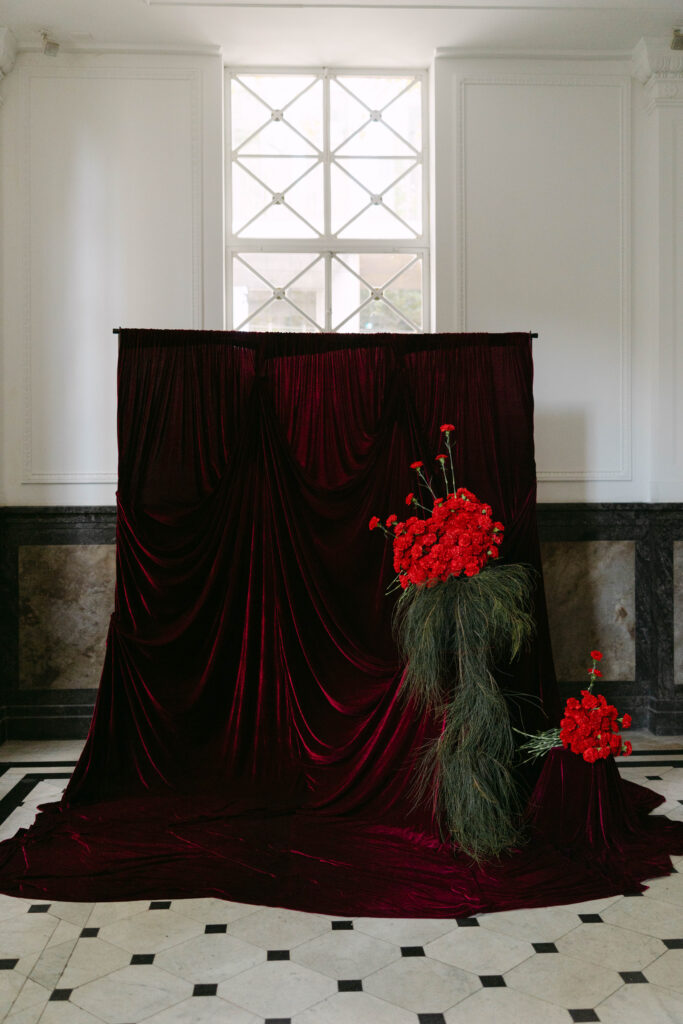
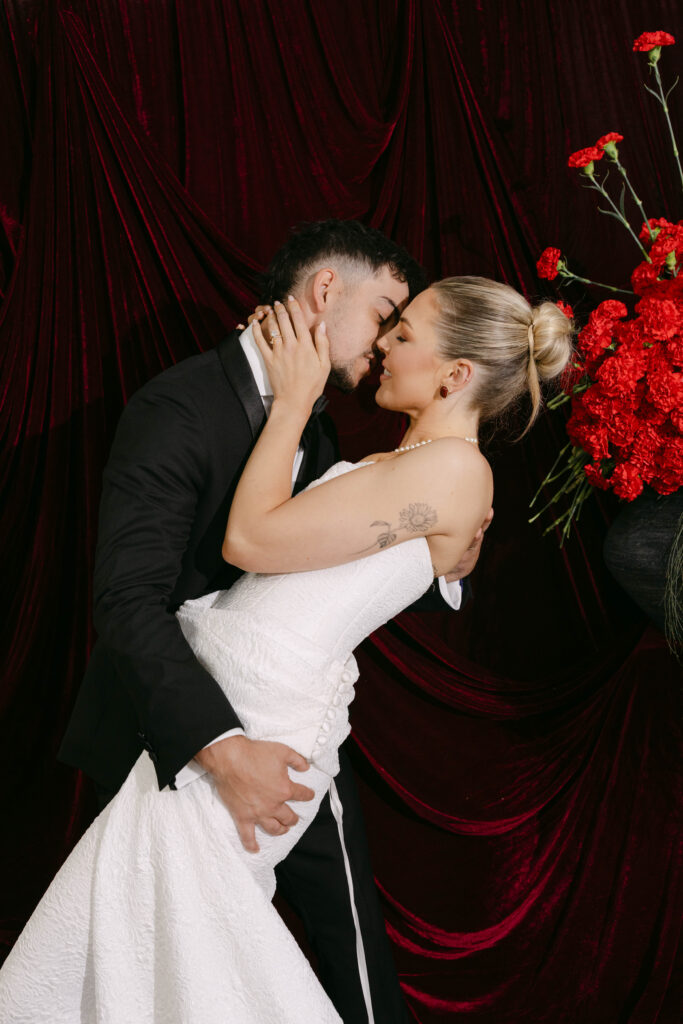
What separates colour drenching from basic colour theming is intentionality. Everything in the frame belongs to the same universe. When a couple commits to a colour, the documentary photos tell a more complete visual story. It’s no longer just a space, but a sensory vision brought to life.
As a wedding photographer, colour-drenched weddings are genuinely a dream to shoot. The images feel cohesive whether I’m capturing close-up details or wide reception shots. There’s an intensity and statement quality to them that elevates even the simplest compositions.
Is this wedding trend worth adopting? If you love maximal visual impact and have a particular aesthetic in mind, absolutely. Colour drenching requires commitment and coordination with your wedding stylist and florist, but when executed well, it helps create some of the most breathtaking, editorial-worthy imagery.
Trend 6: Unexpected Colour Pairings
This is a softer take on colour drenching for couples who want some impact without committing to the full immersion. We saw unexpected colour combinations, such as chartreuse and burgundy, play out in the 2025–2026 season. For 2026–2027, I envision rich, saturated tones, such as chocolate brown, deep burgundy, and cobalt blue, being paired with contrasts that shouldn’t work but somehow do, like lemon yellow or hot pink.
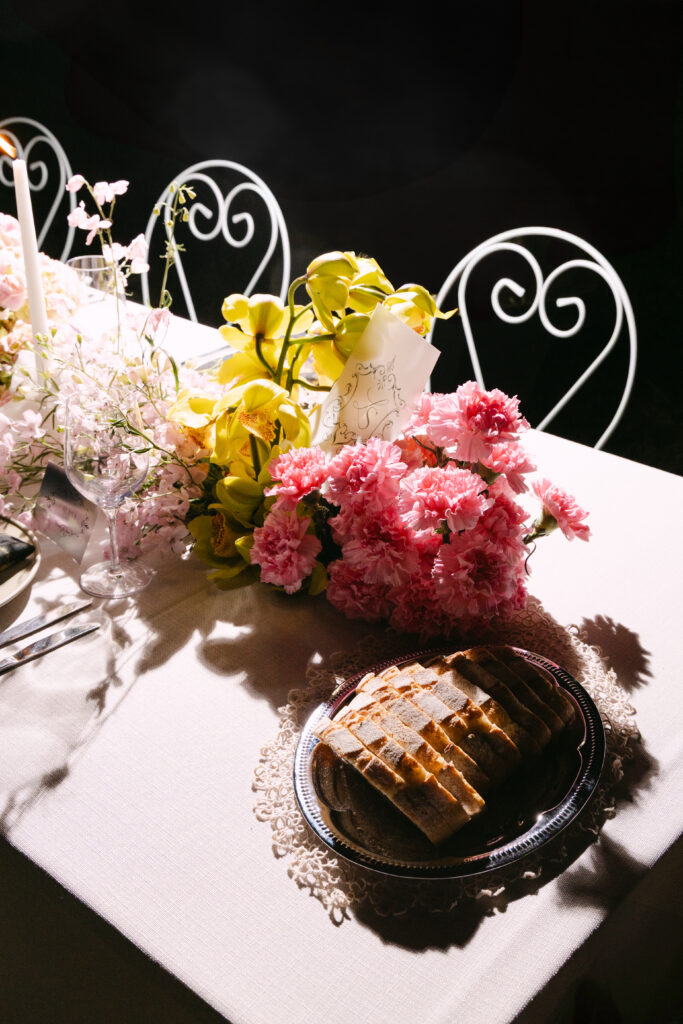
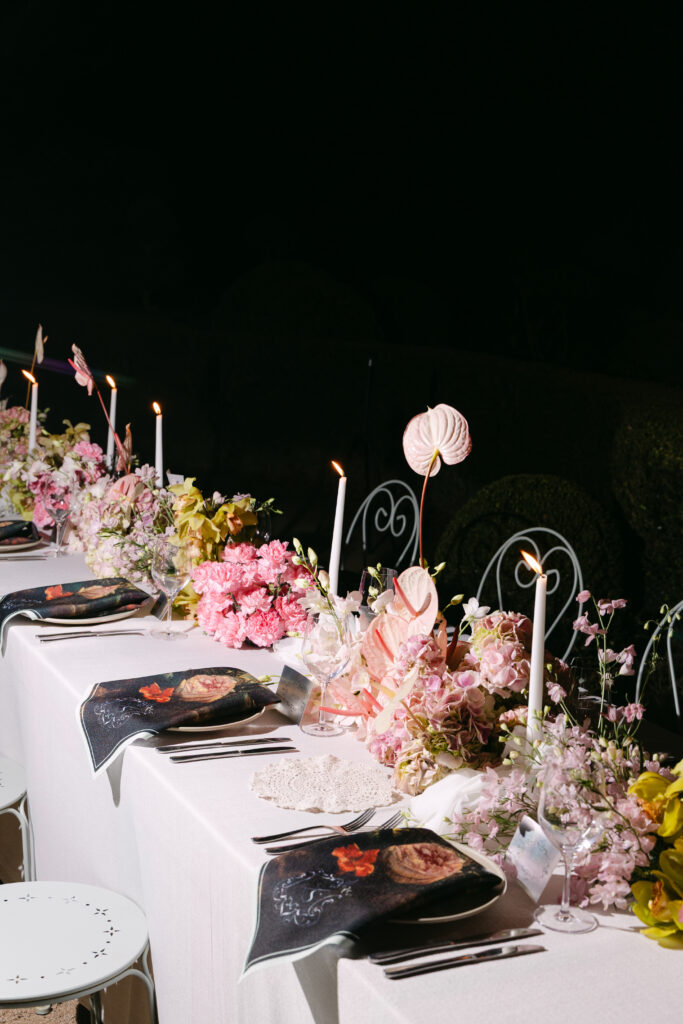
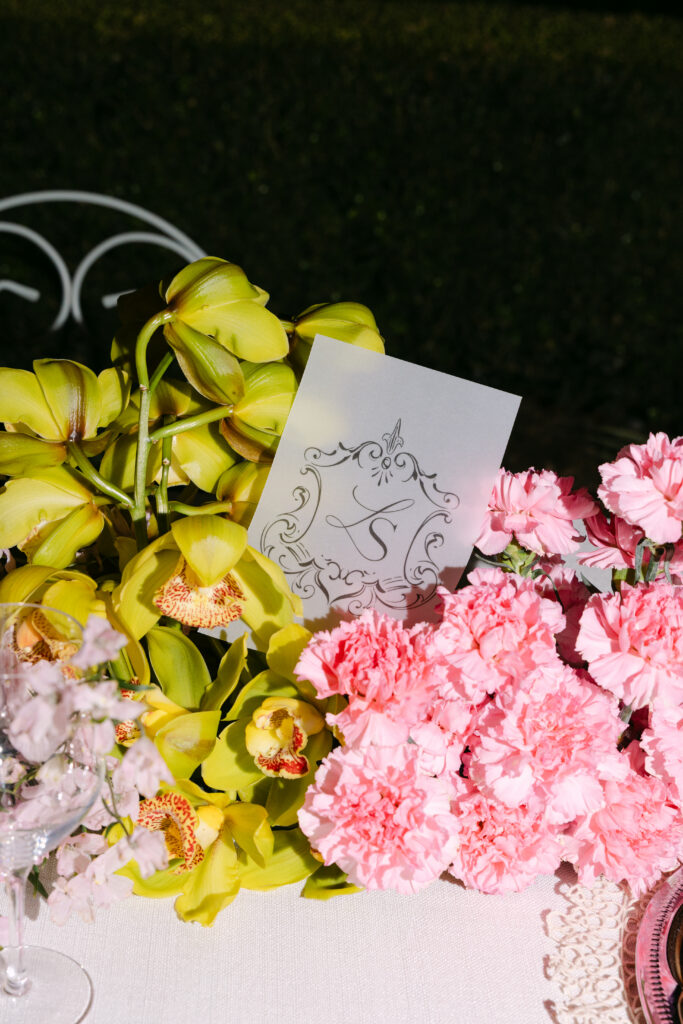
What makes this trend even more interesting is where couples are placing that colour, whether it’s the groom’s suit, the ceremony chairs, or just the floor at the reception. I recently saw a Vogue wedding feature a cobalt-blue floor, with the rest of the space drenched in stark white, creating a striking contrast.
These unexpected pops create visual anchors in the frame. They draw the eye without overwhelming the composition. When strategically placed, they add editorial edge to portraits and keep wide shots from feeling too vanilla.
Staying power? Strategic colour choices and placements have always been a feature of high-end wedding design. This isn’t about highlighting a specific shade, but understanding how contrast and placement create impact. If you’re drawn to bold choices but want restraint elsewhere, this wedding styling trend offers the best of both worlds.
Trend 7: Organic Tactile Styling
There’s a noticeable trend of introducing unexpected textures and objects in 2026–27 wedding styling. The move away from flat printed paper towards objects with physical weight and organic detail: feathered edges, embroidered elements, hand-torn paper, melted wax seals, layered fabrics.
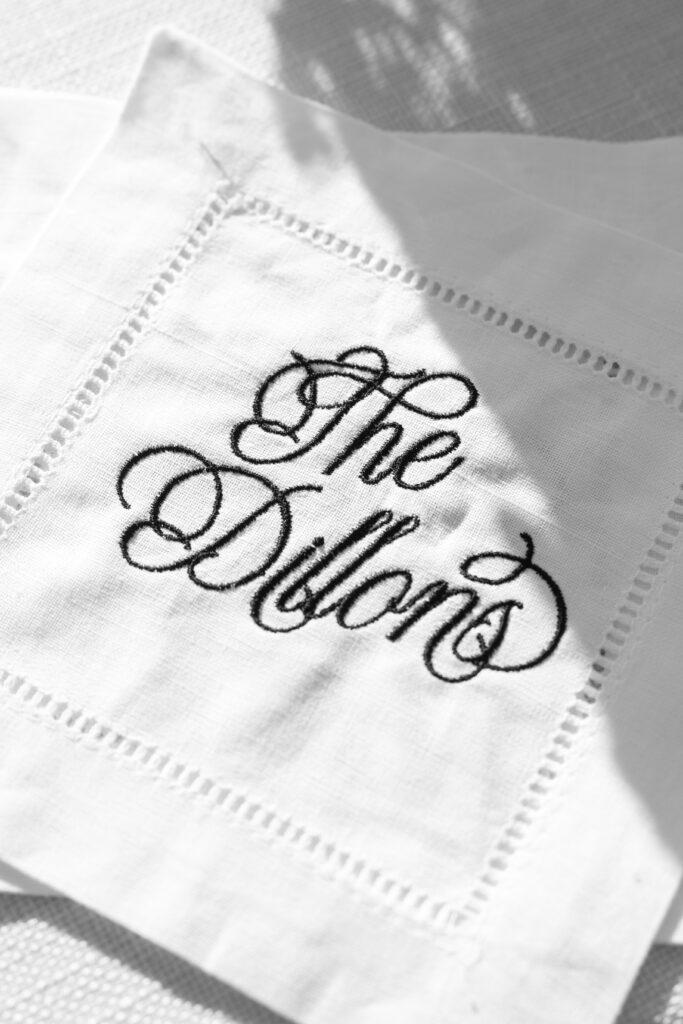
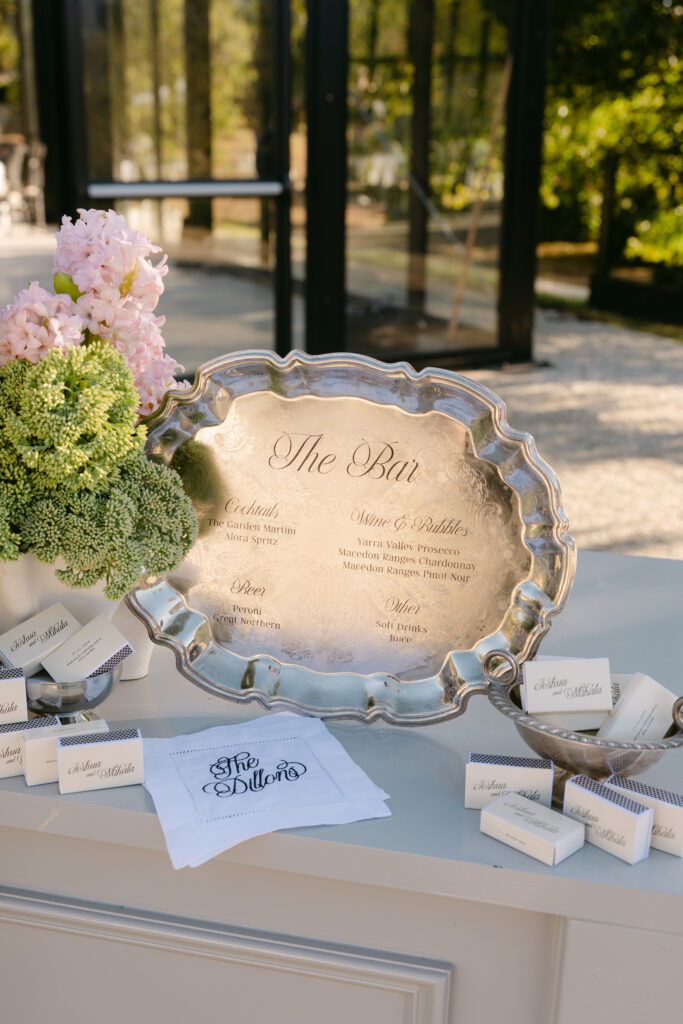

Even more interesting are the unexpected inclusions and combinations, such as vintage keys used as escort cards, fresh fruit and sculptural objects woven into tablescapes that don’t immediately make sense but somehow feel completely right. Taking cues from fashion editorial spreads, each object is balanced with clean compositions and generous white space, creating strategic points of interest.
Photographically, tactile styling adds depth and visual layers because texture catches light differently.
Is it here to stay? Yes, but it needs to be done strategically. The key is to ensure that those unexpected elements have a genuine connection to your story, not just randomness for its own sake. When curated, it creates visual anchors with meaning.
Trend 8: Intentional Minimalism, Purposeful Everything
While the design debate between minimalism and maximalism will always live on, there’s been a recent movement away from “more for the sake of more”. Couples are opting for refined simplicity over maximalism, prioritising materials and mood rather than quantity. Not minimal as in sparse, but minimal as in nothing is there without a reason. Every detail can be reused, repurposed, or carries meaning beyond just filling a table.
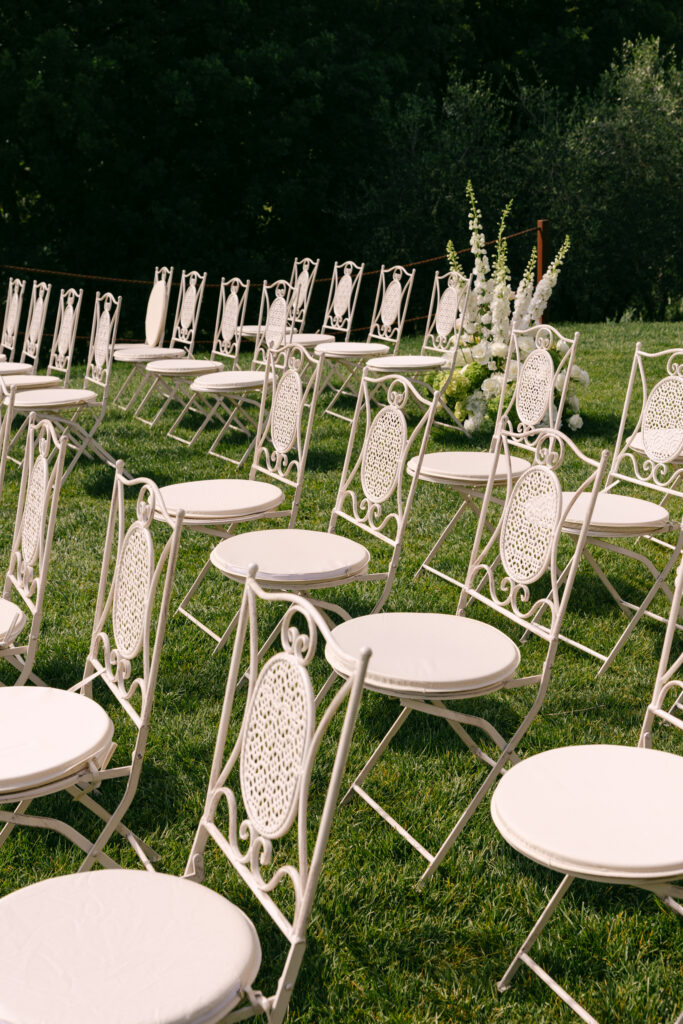
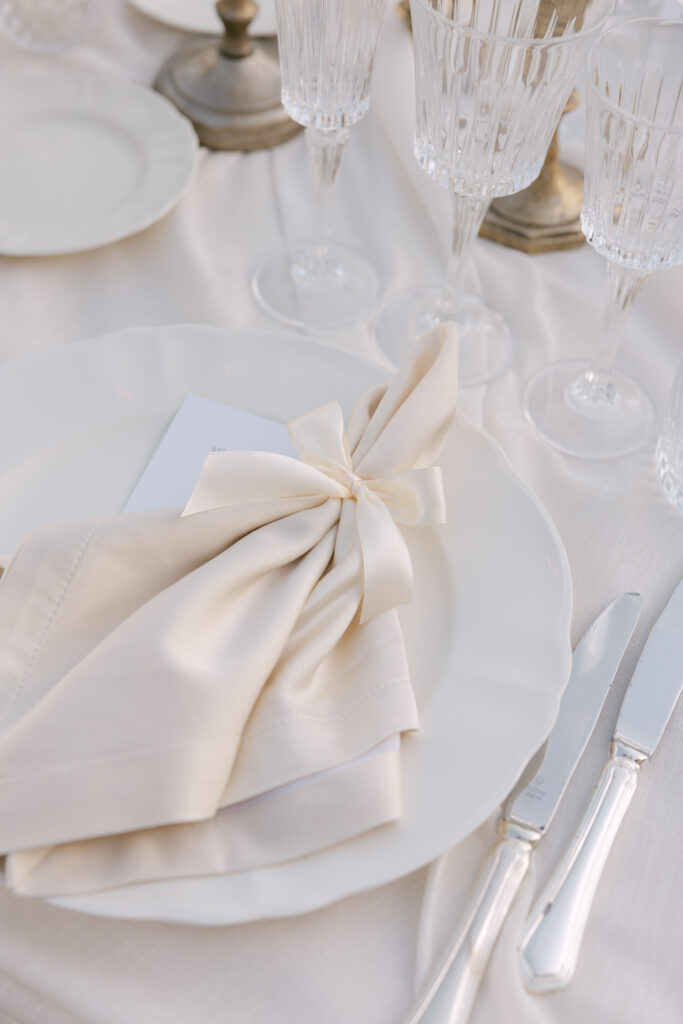
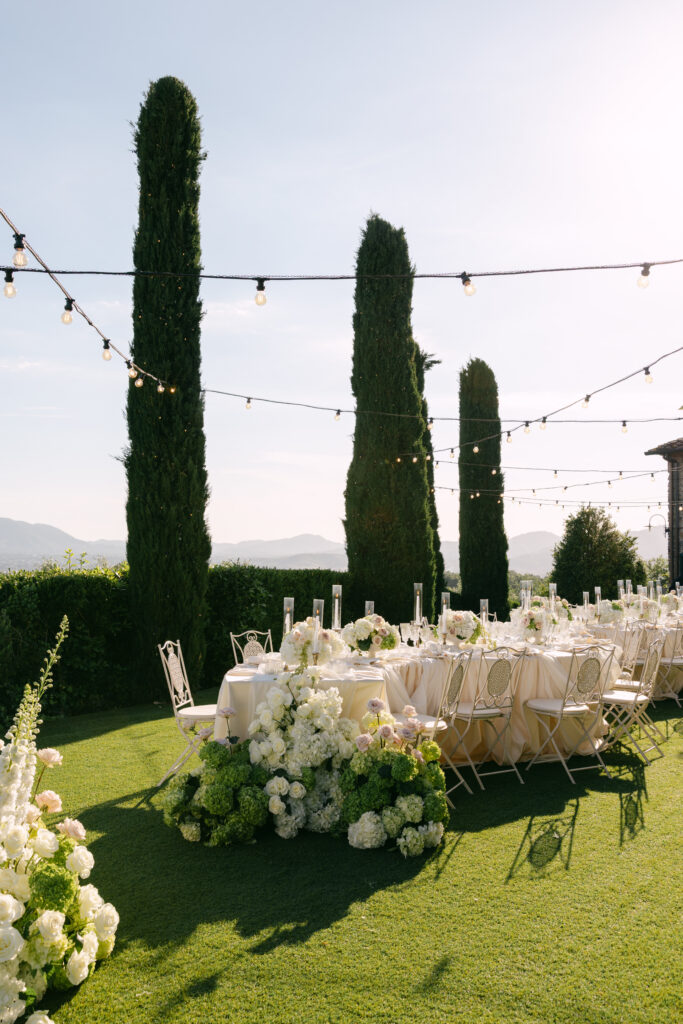
This matters photographically more than you might think. Overly decorated rooms are often harder to photograph well, especially when styling lacks purpose. I can’t tell you how many times I’ve had to move floral arrangements or candles from tables because they’re blocking sight lines during speeches or making it look like couples have candles coming out of their noses.
When styling is curated thoughtfully with both aesthetics and experience in mind, the room breathes. Portraits feel clean and uncluttered. Documentary moments aren’t competing with visual noise. The focus stays on faces, emotions, and interactions, not meaningless props.
Will this last? Absolutely. Purposeful minimalism isn’t just a trend; it’s a philosophy. It relieves the pressure to fill every surface and instead asks, “Does this serve the experience?” When the answer is yes, you’re left with imagery that feels timeless rather than over-styled.
Trend 9: Spaced Out Portrait Timings
While this is more of a wedding-planning trend than a styling trend, it’s worth including because most couples don’t realise it’s even an option. Instead of disappearing for 45 to 60 minutes post-ceremony, you can build in two to three short(er) portrait windows throughout your day.

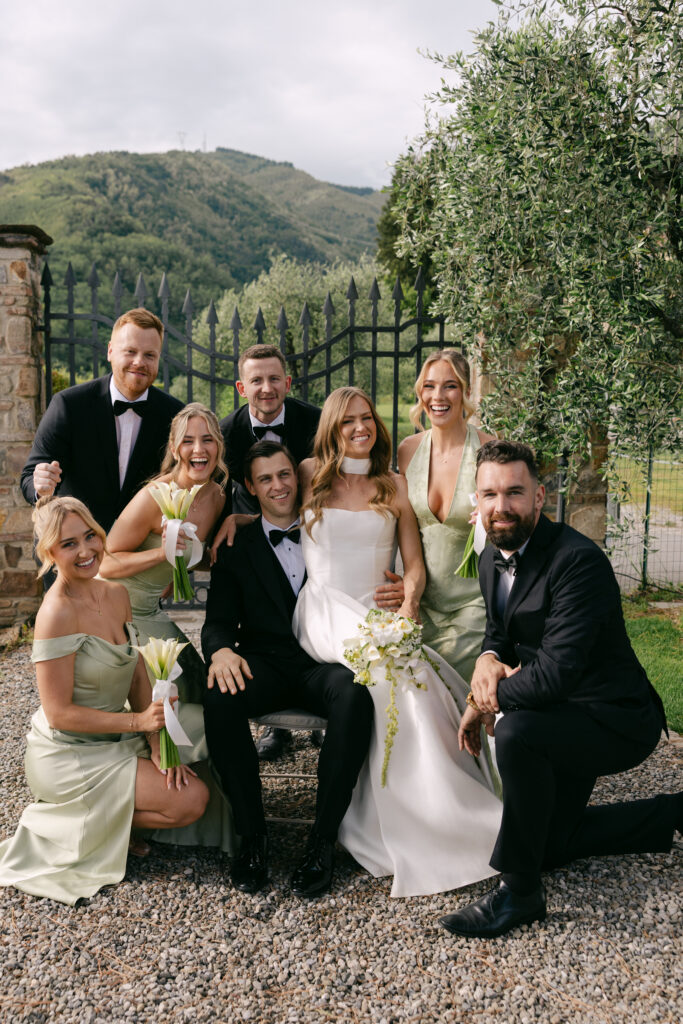
A quick 10 minutes for individual and wedding party portraits during and right after getting ready. Another 10 minutes after the ceremony, while the emotions are still running high. A golden hour moment later in the afternoon, and maybe a few quiet minutes together during the reception or just after an outfit change.
By spacing out your portrait timings, the portraits will feel less like a production and more like natural pauses in the day. It’s something I’ve been implementing for the last few years, and it consistently produces better images and an even better overall experience.
My personal recommendation? 100% embrace this if you want to stay present at your own wedding. The traditional “let the guests entertain themselves while we vanish for an hour” approach serves the timeline more than it serves you. Breaking portraits into smaller windows throughout the day lets us play with different light while keeping your connection intact.
Honour Your Own Wedding Vision Over Trends
Trends, love them or hate them, will play a huge role in shaping the overall look and feel of your wedding. They influence everything from what you wear to the experience you create for your guests and how your photographs will turn out. But when you’re planning and booking suppliers 12–18 months out, it can be tricky to discern which ones will still resonate when your day arrives.

This is why coming back to your own vision matters more than following what’s popular. Trends serve as inspiration, not templates.
The most timeless weddings happen when couples collaborate with vendors who understand current trends but channel them intentionally — helping you refine aesthetic choices while still making sure everything aligns with your story and setting. Because a trend that feels effortless at a heritage estate may not translate at a grungy urban warehouse. Context matters.
If you’re ready for a creative photography partnership that honours your ‘yes’ era, please reach out today. I take on a limited number of weddings each year to ensure a collaborative, considered experience from start to finish.


